

This post may contain Affiliate Links. Please see my Disclaimer for more details.
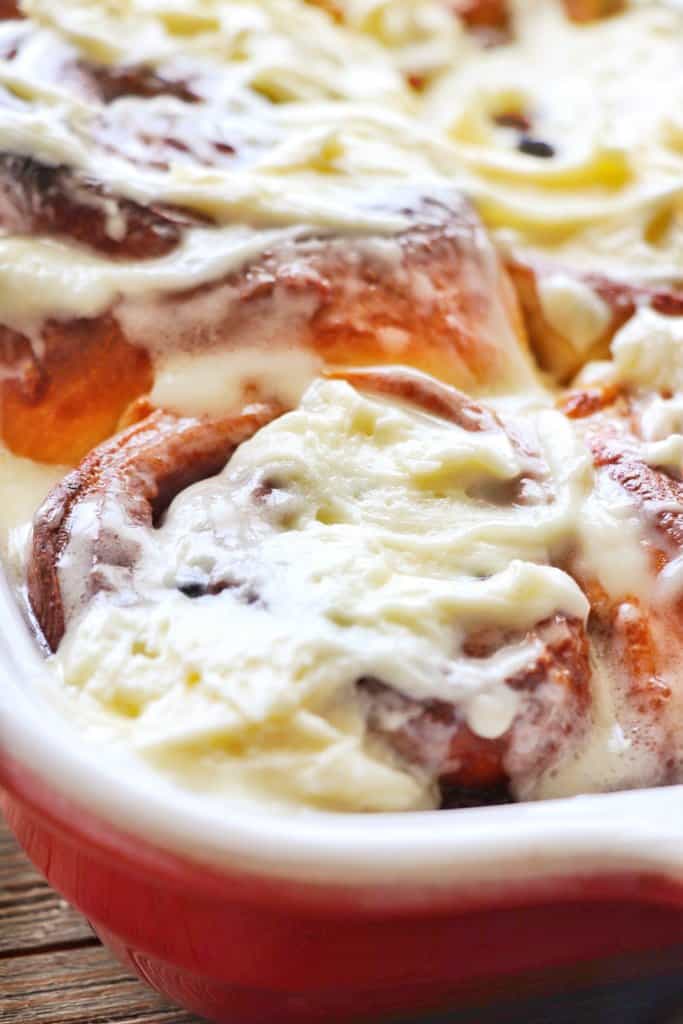
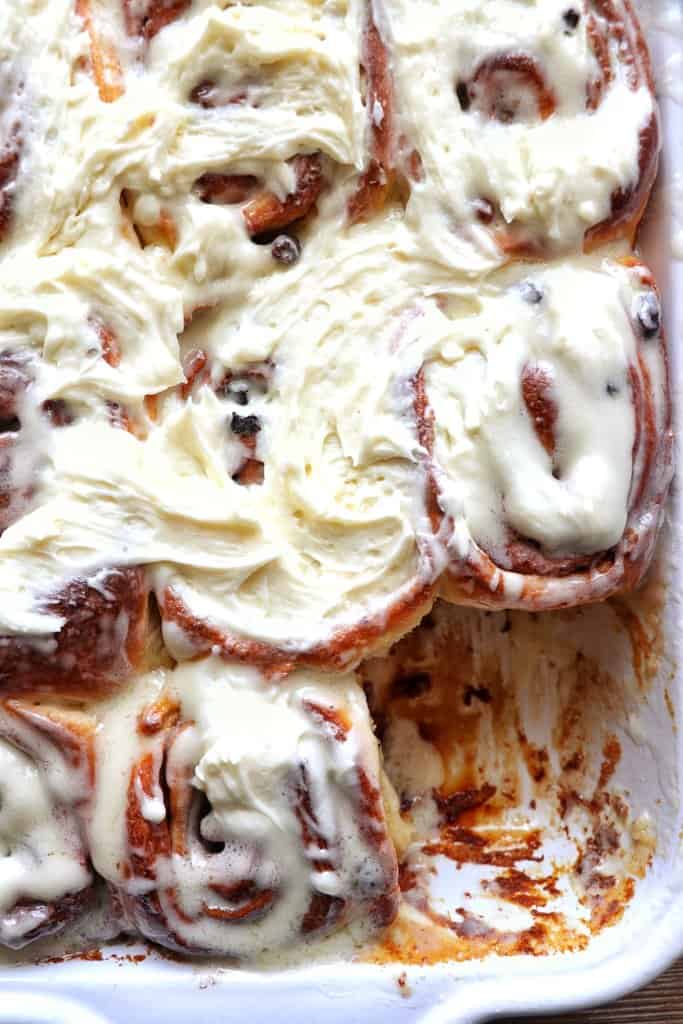
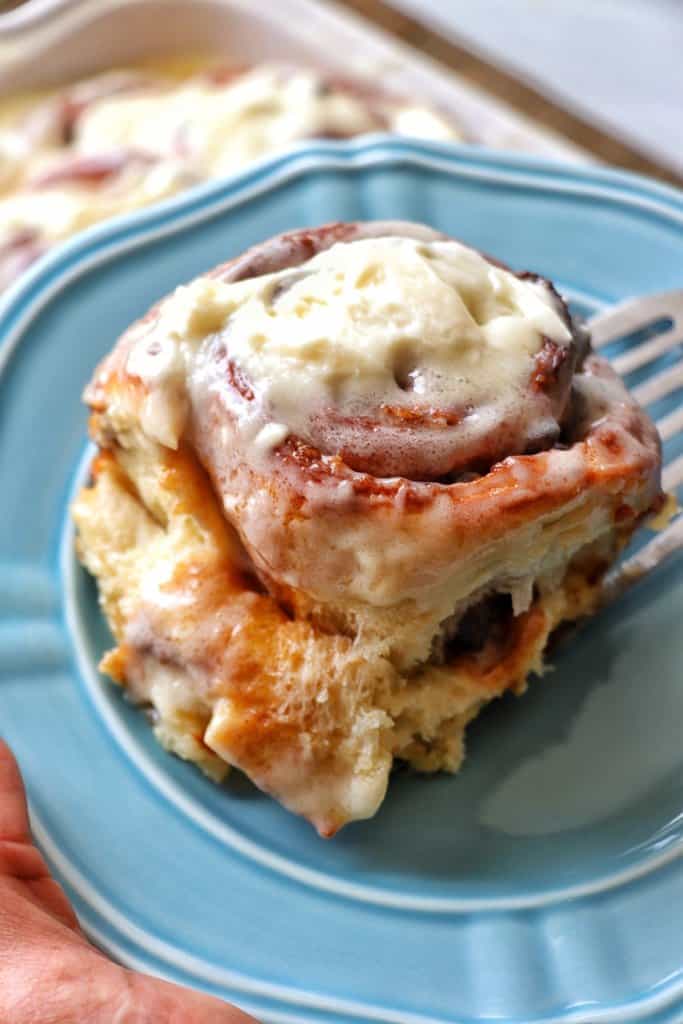
My Homemade Cinnamon Rolls are light, buttery, and divine. The mascarpone frosting alone will change your mind about buying store-bought rolls in one bite.
Here are a few of my other cinnamon roll recipes: Sweet Potato Cinnamon Rolls, Red Velvet Cinnamon Rolls, Sticky Buns, and Chocolate Cinnamon Rolls.
Latest Recipe Video:
Jump to:
Cinnamon rolls are classics for a reason; we all have a story about our favorite cinnamon roll or the first time we ever had one. My wife's favorite is Cinnabon cinnamon rolls.
That's why I’m paying homage to my favorite childhood cinnamon roll from McKenzie's Bakery. Their cinnamon rolls had raisins with a light icing. I know several people are anti-raisins, so it’s optional.
The cream cheese frosting is being swapped for a mascarpone frosting recipe that's so thick it has to be smeared on rather than poured on.
I tested this recipe four times before getting it right where I wanted it. At first, I tried making it with mashed potatoes because potatoes reduce gluten formation and create amazing fluffy cinnamon rolls.
Yes, I was using mashed potatoes, but not leftovers from dinner. After that failed to come out to my desired liking, I omitted them. I ended up with this recipe, which I am willing to put up against any other cinnamon roll.
Pillow soft dough kissed with the perfect amount of brown sugar and cinnamon and cream cheese frosting is a win!
Every time I make these, the only question I have after "OMG" is when are you making them again?!
It's time for you to make the perfect cinnamon roll recipe and receive the same praise.
Key Ingredients
If you're going to impress anyone with your homemade cinnamon rolls, you will need these ingredients to succeed.
Active Dry Yeast
We need yeast so cinnamon rolls can get their signature flavor and fluffy texture.
Unbleached All-Purpose Flour
I always use unbleached flour for baking and cooking. Feel free to use gluten-free baking flour as a swap for a gluten-free treat.
Cinnamon
We cannot have homemade cinnamon rolls without cinnamon. I like to use a Saigon cinnamon from Costco, but use your favorite brand, but know all cinnamon is not created equal.
Unsalted Butter
Butter equals flavor! Using butter will make these rolls top-notch instead of shortening or butter-flavored shortening.
Raisins
Raisins add a nice pop of flavor to these easy homemade cinnamon rolls.
Dark Brown Sugar
I find dark brown sugar's flavor superior to light brown sugar because it gives a richer, warm maple flavor.
Powdered Sugar
This is the base of our incredible mascarpone frosting or cream cheese frosting.
Mascarpone Cream Cheese
Most cinnamon rolls use cream cheese, but mascarpone cheese is an Italian cream cheese that Chefs always use. I wanted to impress my guest with my mascarpone frosting.
How To Make Homemade Cinnamon Rolls
Here's how you will be successful at making the best homemade cinnamon roll recipe from scratch every single time.
Cinnamon Roll Dough:
Preheat oven to 170°F/76°C or warm; cut the oven off once hot. Mix the yeast and warm water in a large mixing bowl and set aside for 5 minutes.
Add the sugar, kosher salt, softened butter, eggs, vanilla extract, and 3 ½ cups of flour, and stir together. Add 3 ¼ cups flour and mix until a soft ball of dough forms. You can use a stand mixer with the dough hook attachment, too.
On a lightly floured surface, knead the dough 20 times until the dough is smooth, forms into a ball, and transfer to a lightly greased bowl, cover with a towel or plastic wrap, and pop in a warm oven for 1 hour; the cinnamon roll dough will double in size.
Cinnamon Sugar Filling:
Meanwhile, make the cinnamon sugar filling; mix brown sugar, cinnamon, and kosher salt in a medium bowl.
Second Dough Rise:
After the dough rises and has doubled in size. Punch the dough down; on a lightly floured surface, roll the dough to ¼ inch thickness and into a rectangle shape. Brush with melted butter and evenly spread the cinnamon sugar mixture over the dough, then the raisins.
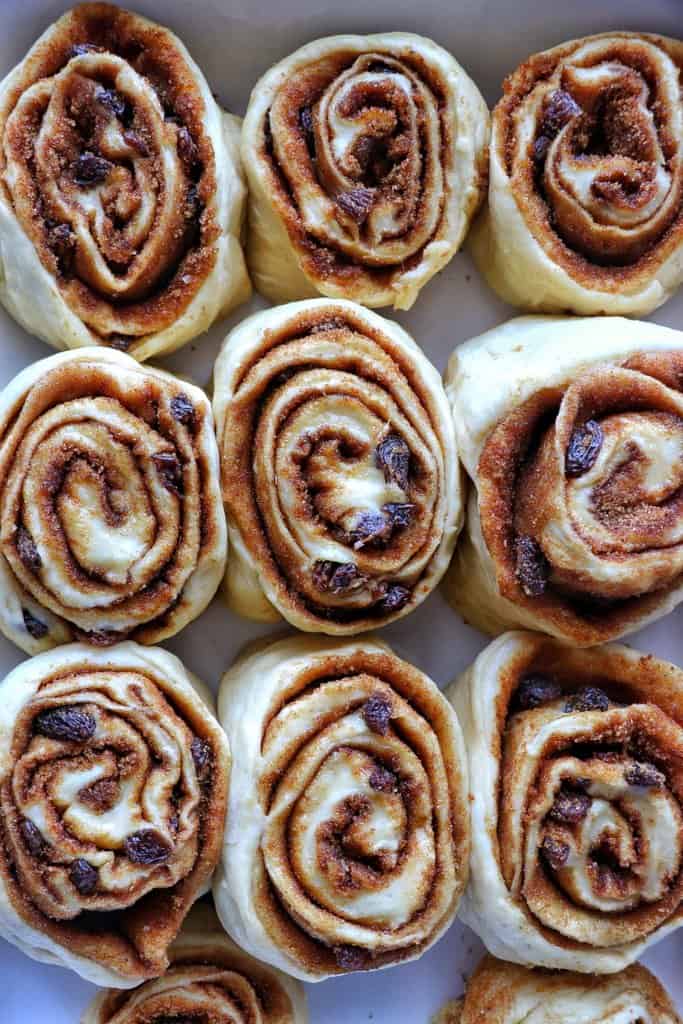
Use a rolling pin to roll the dough into a log shape. Cut the log into 1-inch slices, place on a baking sheet or baking dish, cover, and pop in the fridge covered with plastic wrap or a towel for 1 hour.
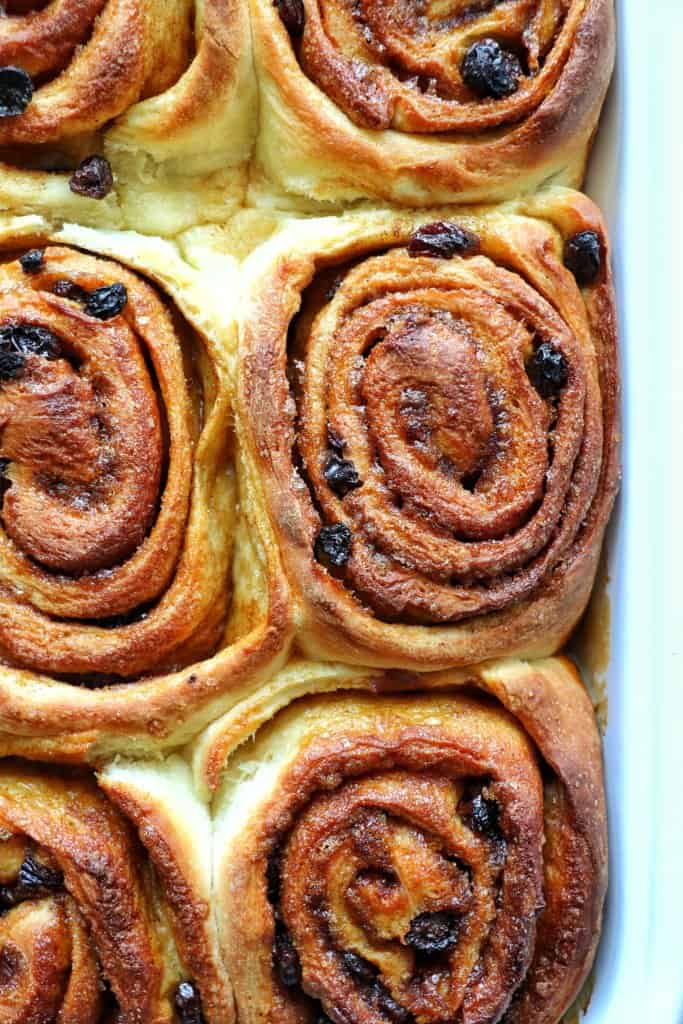
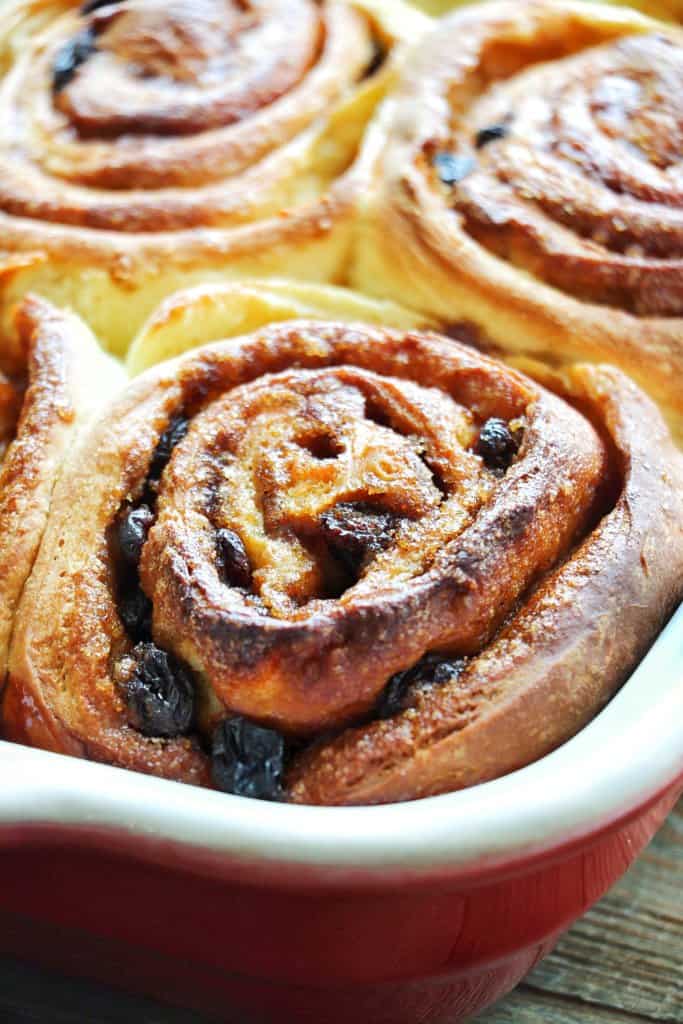
Preheat oven to 400°F/204°C; bake cinnamon rolls for 20 minutes, cover loosely with foil, and continue baking for 10 minutes, until golden brown.
Mascarpone Frosting:
While cinnamon rolls bake, add the powdered sugar, mascarpone, butter, vanilla extract, and salt in a medium bowl and stir until smooth. Icing should be thick enough to spread.
Once the cinnamon rolls are finished baking, cool for 10 minutes before smearing mascarpone cream cheese frosting evenly over each roll. Enjoy warm rolls and a glass of milk.
How To Store Homemade Cinnamon Rolls
Homemade cinnamon rolls will be fresh 3 days after making them if you keep them on the counter in an airtight container. However, rolls can be kept in the refrigerator for 7 days.
Freeze baked cinnamon rolls in a freezer storage bag or airtight container for 3 months. Thaw before reheating in the oven.
Mascarpone frosting can be made one day in advance and kept in an airtight container. It can be stored for 1 month in the refrigerator.
Reheat cinnamon rolls in a 300°F/148°C oven for 5-10 minutes, depending on size.
Wrap any unbaked cinnamon rolls in plastic wrap in a storage bag and freeze the cinnamon roll dough for 2 months.
Cinnamon Roll Substitutions, Tips & Tricks
Here are some of my top tips and tricks to help you make the best homemade cinnamon roll recipe at home:
- If this is your first time making a homemade dough with yeast. When you make the dough, feel confident and trust the recipe.
- Proof your dough in the oven. Proofing gives you the perfect temperature in your home for your dough to double in size without the a/c or ceiling fans adjusting the temperature.
- You can use warm milk to mix your yeast with instead of warm water.
- Some ovens come with a proofing option on them. Use it.
- Dry active yeast can be stored at room temperature for one year from its production date. After that, dry active yeast should be refrigerated for 6 months or 3 months in the freezer.
- Make the dough with a large spoon if you do not own a stand mixer. Once the dough is too difficult to stir, add to the light flour surface and knead for 8-10 minutes until the dough is smooth and forms into a ball. If the dough's too sticky, flour your hands as you knead the dough.
- Use your dough 24 hours after it's been refrigerated.
- You can use dried cranberries instead of raisins.
- Feel free to use bread or regular flour instead of unbleached flour.
- You can swap the active dry yeast for instant yeast.
- You can use cream cheese instead of mascarpone for the icing.
- Light brown or granulated sugar can be used instead of dark brown and raw cane sugar.
- Try using a non-hydrogenated shortening or coconut oil instead of unsalted butter.
- If you forget to take your unsalted butter to room temperature, don't panic; cut the butter into half tablespoons of keep on the butter paper while you measure all your ingredients. Once you can leave a fingerprint, you're good to go!
- Cut cinnamon rolls smaller to make 20-24 servings for a large party, and bake on two baking pans.
Frequently Asked Questions
Here are the answers to some of the most frequently asked questions about homemade cinnamon rolls:
What’s the difference between a cinnamon roll and cinnamon bun?
There’s no difference between the two. It’s just a name preference—however, a cinnamon roll and a sticky bun are different. Cinnamon rolls have vanilla or cream cheese icing, whereas sticky buns have nuts and a brown sugar glaze.
How to proof dough in the oven?
I proof my dough in a warm oven. I turn my oven on to warm (170 degrees); I cut it off once hot before placing my dough in. This technique is a great way to help dough rise in the winter or when it’s cold out.
Another technique is to place your bread on the top rack, fill a pan with boiling water on the bottom shelf, and close the oven door. The residual heat will keep the oven warm.
Why should you proof dough in the fridge?
Proofing dough in the fridge is known as “retarding”. This proofing style helps improve the final results of your bread, rolls, or buns. Retarding the dough slows the rise (yeast activity) and gives the bread more flavor, a better crust, and crumbs to your final product. It’s best to use your dough 24 hours after refrigeration.
What the difference between using bread flour vs. regular all-purpose flour?
Bread flour has about 11%-13% protein, while regular all-purpose flour has about 9%-11% protein. The higher amount of protein in bread flour creates much gluten. The higher amount of gluten makes a chewier finished product.
Kneading dough forms gluten that produces the characteristics of bread. You can use all-purpose flour as a substitute for bread flour and still get a great finished product.
What makes homemade cinnamon rolls dry?
A few things can cause your cinnamon rolls to be dry. The first is not properly proofing the dough. Letting your dough rise helps with the elasticity and moisture of the dough. Also, not using enough butter, eggs, water, or milk can give you a drier dough. Finally, baking the cinnamon rolls too long will always guarantee to have dry ones.
Breakfast Ideas:
Here are a few more delicious recipes you can add to your repertoire.
- Buttermilk Doughnuts
- Pineapple Upside Down Sticky Buns
- Triple Chocolate Brownies
- Sweet Potato Waffles
- Cajun Fish and Grits
Before You Begin
Here are my steps to stay efficient in the kitchen.
Step 1: Preheat your oven to 200°F/93°C or warm before pulling the ingredients out. Then, cut the oven off once it heats up.
Step 2: Put everything measured into individual bowls.
Step 3: Start following the recipe and get ready for the best cinnamon rolls ever!
I hope you're ready to try my homemade cinnamon rolls? I've had friends who have literally stop eating any store-bought or out of the can cinnamon rolls ever again. I hope you have the same story after whipping these cinnamon rolls up!
Click here to subscribe to MY NEWSLETTER for easy and free recipes right into your inbox!
To pin this recipe and save it for later, you can use the Pin button on the recipe card, the sharing buttons above or below this post, or any of the photos above.
Tag me @kennethtemple_ and use #LezEat on Instagram to share your remakes with me, and don't forget to leave a star rating and comment below.
📖 Recipe
Homemade Cinnamon Rolls with Mascarpone Frosting
Ingredients
Cinnamon Rolls:
- 1 package of active dry yeast
- 1 ½ cups warm water
- ½ cup raw cane sugar
- 1 teaspoon kosher salt
- 1 stick unsalted butter softened
- 2 large eggs slightly beaten
- ½ teaspoon vanilla extract
- 6 ¾ cups unbleached all-purpose flour plus more for kneading
Cinnamon Sugar Filling:
- 2 cups dark brown sugar
- 2 tablespoons cinnamon
- ¼ teaspoon kosher salt
- 4 tablespoons melted unsalted butter
- 1 cup raisins
Mascarpone Frosting:
- 8 oz. mascarpone cheese
- 1 lb. powdered sugar
- 12 tablespoons unsalted butter softened
- 1 teaspoon vanilla extract
- ½ teaspoon kosher salt
Instructions
Cinnamon Rolls:
- Preheat oven to 170°F/ 73°C or warm; cut the oven off once hot. In a large mixing bowl, mix the yeast and warm water and set aside for 5 minutes until it bubbles slightly. Add the sugar, kosher salt, butter, eggs, vanilla extract, and 3 ½ cups of flour and stir together. Add 3 ¼ cups flour and mix until a soft ball of dough forms.
- On a lightly floured surface, knead the dough 20 times until the dough is smooth, forms into a ball, and transfer to a lightly greased bowl, cover with a towel, and pop in a warm oven for 1 hour; the dough will double in size.
Cinnamon Sugar Filling:
- Meanwhile, make cinnamon sugar filling; in a bowl, mix brown sugar, cinnamon, and kosher salt.
Second Dough Rise:
- After the dough has doubled in size. Punch dough down on a lightly floured surface, roll dough to ¼ inch thickness, and into a rectangle shape. Brush with melted butter and evenly spread the cinnamon mix over the dough, then raisins. Roll the dough into a log shape. Cut the log into 1-inch slices, place in a 9x13 baking dish, cover, and pop in the fridge for 1 hour.
- Preheat oven to 400°F/204°C; bake rolls for 20 minutes, cover loosely with foil and continue baking for 10 minutes, until golden brown.
Mascarpone Frosting:
- While cinnamon rolls bake, in a medium bowl, add the powdered sugar, mascarpone, butter, vanilla extract, and salt and stir together until smooth. Icing should be thick enough to spread.
- Once the rolls are finished baking, cool for 10 minutes before smearing icing evenly over each roll. Enjoy warm.
Video
Notes
- If this is your first time making a homemade dough with yeast. When you make the dough, feel confident and trust the recipe.
- Proof your dough in the oven. Proofing gives you the perfect temperature in your home for your dough to double in size without the a/c or ceiling fans adjusting the temperature.
- You can use warm milk to mix your yeast with instead of warm water.
- Some ovens come with a proofing option on them. Use it.
- Dry active yeast can be stored at room temperature for one year from its production date. After that, dry active yeast should be refrigerated for 6 months or 3 months in the freezer.
- Make the dough with a large spoon if you do not own a stand mixer. Once the dough is too difficult to stir, add to the light flour surface and knead for 8-10 minutes until the dough is smooth and forms into a ball. If the dough's too sticky, flour your hands as you knead the dough.
- Use your dough 24 hours after it's been refrigerated.
- You can use dried cranberries instead of raisins.
- Feel free to use all-purpose flour instead of bread flour.
- You can swap the active dry yeast for instant yeast.
- You can use cream cheese instead of mascarpone for the icing.
- Light brown or granulated sugar can be used instead of dark brown and raw cane sugar.
- Try using a non-hydrogenated shortening or coconut oil instead of unsalted butter.
- If you forget to take your unsalted butter to room temperature, don't panic; cut the butter into half tablespoons of keep on the butter paper while you measure all your ingredients. Once you can leave a fingerprint, you're good to go!
- Cut cinnamon rolls smaller to make 20-24 servings for a large party, and bake on two baking pans.
Leave a Reply